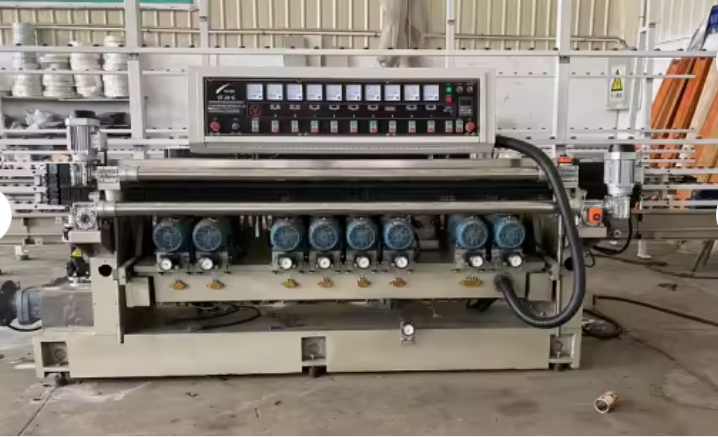
On the coater line, the clock starts the second the Low-E stack hits the drying zone. Let the heat profile drift, and you’re staring down uneven cure, pinholes, and a batch that bombs emissivity checks. If the module can’t ramp fast, the whole line stalls. We built our Low-E glass coating dryer to take that guesswork out. What matters under the hood The dryer leans on NIR emitters in a fast-response quartz envelope, throwing high radiant density straight at the coating while the glass body stays cooler. That targets solvents and curing chemistry without pushing the substrate into excessive thermal stress. The output is calibrated for industrial duty cycles, with tight control on power density, spectral match, and dwell uniformity. You get a repeatable thermal field across the glass width, and it stabilizes quickly after each glass change. Why it behaves on a running coater When you’re running continuous coater production, the drying zone has to act like a fixed process window—not something you chase all shift. Our module brings the coating up to temperature fast, so the line can push higher meters per minute without waiting. Uniform heating cuts edge over-dry and center under-cure, which means less scrap and fewer reworks. Energy use drops because NIR heats the coating directly, not the air around it. And the module is engineered as a drop-in replacement for standard OEM heating sections. The practical bits you’ll run into NIR drying is line-of-sight, so reflector alignment and emitter positioning have to be spot-on to keep uniformity. Expect a short commissioning window to dial in power, conveyor speed, and cooling. Once it’s set, the process stays stable—but it needs disciplined maintenance and consistent glass entry conditions.