Getting Glass Stress Right (And Why 0.1°C is the Magic Number)
When you’re working with lab-grade glassware, internal stress is basically a ticking time bomb. If you don’t nail the cooling rate, the glass holds onto this permanent tension. It looks fine on the shelf, but the second you pull a vacuum or start a reaction?**Crack.**Everything goes south. That’s why we obsess over the annealing point. It’s that sweet spot where the glass is soft enough for the stress to just… melt away, but not so soft that the whole vessel sags into a puddle.
Why we fight for 0.1°C
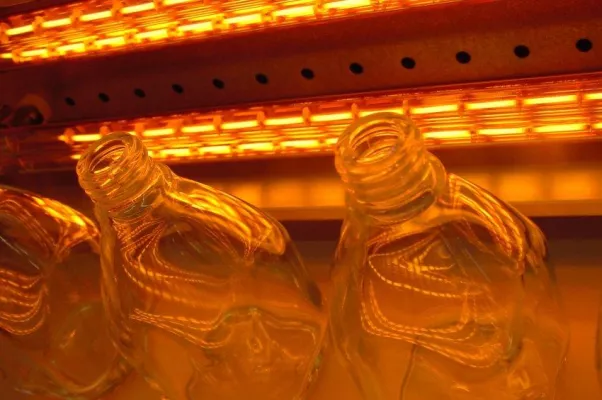
Most industrial heaters are “close enough.” They swing by 5°C or 10°C, and for a lot of jobs, that’s plenty. But for high-end annealing, that’s a disaster. We use infrared elements that hit a 0.1°C precision. It sounds overkill until you realize it’s the only way to stop thermal shock. You want the entire wall of the vessel to hit that annealing temp at the exact same time. If your heater overshoots, the glass warps. If it undershoots, the stress stays locked in the molecules. You need a PID loop and IR elements that can pivot the power the instant the temp drifts.
Dealing with the thermal gradient
The beauty of infrared is that it hits the glass directly. You aren’t wasting time heating up the air around the piece. We use short-wave IR because it punches through the surface quickly, making sure the core and the skin of the glass are moving in sync. But you have to be smart about where the heat goes. If you dump too much energy into one spot, you’ve just created a brand new stress point. It’s all about balancing the wattage across the array to keep everything flat and steady.
The catch: Power vs. Stability
Here’s the thing: all this precision is useless if your power is dirty. If your shop floor has voltage spikes, that 0.1°C precision vanishes. You’ll want a dedicated voltage stabilizer or a high-end SCR controller to keep the current clean. Otherwise, the lamps flicker, the temperature drifts, and you’re just making expensive scrap for the bin.