Getting Low-E Glass Preheating Right (Even When It’s Huge)
If you’re trying to preheat wide-format Low-E glass, you know the struggle. You need the heat to be perfectly even across the whole sheet. But once you cross that 3-meter mark, the standard lamps you buy off a shelf just don’t do the job. That’s where we come in. We build custom infrared heater units designed specifically to kill off those annoying cold spots in wide-span tunnels.
The Headache of Scaling Up
Building a heater that’s over 3 meters long isn’t as simple as just using a longer quartz tube. It’s a balancing act. You’ve got to deal with thermal expansion and voltage drops. If the power isn’t balanced perfectly across the entire length, you end up with “zebra striping.” Those uneven heat bands are a nightmare—they can ruin your Low-E coating instantly. We spend our time obsessing over the power density so the heat stays consistent from the first inch to the last. And a word of caution: check your power supply. A 3-meter array pulls a massive amount of current. If your wiring is too thin, the voltage drops by the time it reaches the end. Result? The edges of your glass never actually hit the temperature they need.
The Nitty-Gritty of the Build
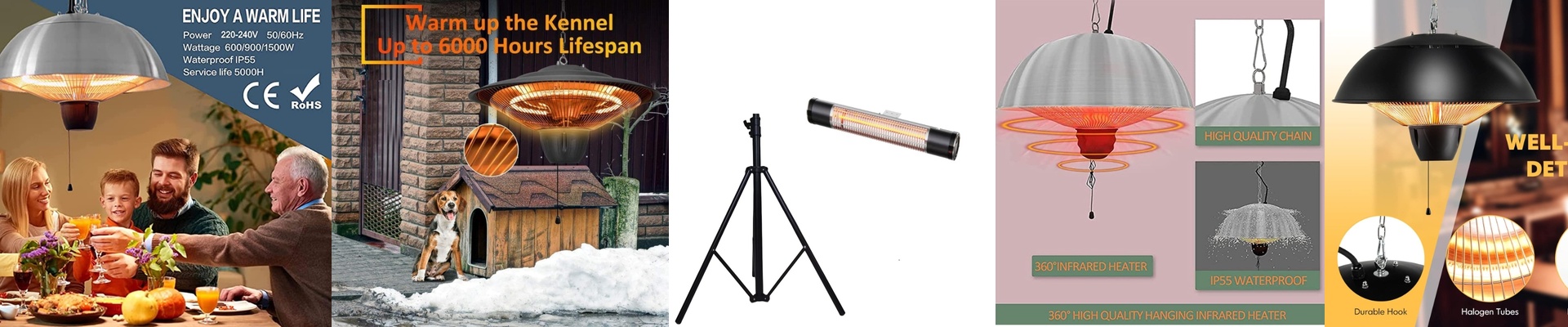
We stick with high-purity quartz tubes. Why? Because they give you short-wave emission, which punches through the glass surface much faster than the long-wave stuff. But the real magic is in the boring parts—the mounting brackets and the connectors. In a production line, things vibrate and heat up and cool down constantly. We use industrial-grade terminals that actually stay tight, so you aren’t chasing loose connections in the middle of a shift.
The Stuff People Forget
Here is the thing: high-density infrared arrays put out a ton of heat. Like, a lot. You can’t just bolt these in and walk away. If your exhaust system isn’t beefy enough to pull that ambient heat out of the oven, you’re asking for trouble. You’ll start overheating your conveyor bearings and the lamp housings. Plus, if the airflow is too low, the lamps run hotter than they’re supposed to. They’ll burn out way too fast, and then you’re stuck with downtime you didn’t plan for.